How to responsibly implement AI into your business
 by Neil Metcalf
Introduction: keeping the human in the loop
Every organisation is on its own journey when it comes to AI, but many C-suite executives I speak to think they need to be at the finish line before they’re even ready to set off. If you’re just starting out on your AI journey, you need to capture the hearts and minds of the entire workforce. Everyone must understand the part they play in making the journey and experience a success.
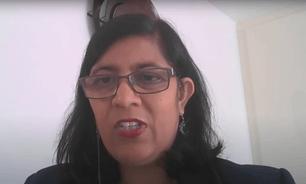
Harvi Johal is head of data at WildBrain and an advocate of “Responsible AI.” She strongly believes that when implementing AI, leaders need to put people at the centre. “Don’t forget why you’re bringing it in,” she says. “It’s not for the sake of the technology – it’s for your people. You’re using AI to facilitate your colleagues in jobs where there are a lot of manual tasks involved, affording them the time to then be innovative and in turn, to grow the business. The focus should be on empowering.”
Let’s take a look at the role that each level of your business will play in introducing AI.
The role of your leadership
Setting your vision
Your C-suite set the vision to take the organisation forward, and that applies equally to AI. They need to understand the objectives, the benefits and how this circles back in relation to the organisation’s KPIs. To do that, it’s important the C-suite realise that not every problem will be solved by AI. Instead, they need to think about what you can do in-house to re-engineer and automate existing manual processes. Harvi believes that it’s helpful to look at your use of AI as an evolving partnership to meet and solve some of your most complex problems.
Placing the guardrails
Your leaders are responsible for setting AI guardrails within the business. By putting these in place, you’re defining your boundaries as an organisation and taking accountability both for your data and for how you are using it. Your leaders need a strategic mindset, cognizant of their relationship with legal and compliance and having a full understanding of regulations. Engaging with these entities is critical to moving forward on your AI adoption journeys.
Caring – about people and the world around you
Your C-suite need to be ethically grounded, aware that they’re not just there to grow the business – they’re responsible for the people within the business. There’s nothing more disconcerting for a workforce than having a new system imposed on them from above, which will fundamentally alter the way they work. As Harvi puts it, “Your leadership needs to have an empathic strain. Be caring and understand the impact on your people and how you can take them on the journey.”
It’s all too easy to forget that the impact of AI extends beyond your workforce to the world around you, says Harvi – as do your ethical considerations as a business. “Ask yourself the following questions: ethically, how sustainable are you as an organisation? What’s the impact of creating data warehouses? What’s your carbon footprint? The workforce need to understand that every time they use ChatGPT, they’re having an impact on the environment. This is just scratching the surface!”
The role of your management
Communicating the vision
The managers in your business are the ones who communicate the vision. They are the conduit between the leadership and the workforce, so they need to be good communicators who not only understand the vision and the direction, but are going to challenge leadership in a responsible way. On top of that, your managers should be able to write functional use cases so that what they’re doing has a purpose and ROI.
Understanding and expanding your skills as a business
So your teams can be properly optimised for AI adoption, managers need to understand your current level of AI expertise and where the gaps are, giving your people the opportunity to learn along the way. “If you’re AI literate,” says Harvi, “then the world’s your oyster. For those people who aren’t, you need to take them incrementally on your AI adoption journey.”
For that to happen, managers need to be savvy enough to understand the skillsets needed and bring in the right people to add to your business’s existing knowledge. An external SME could offer greater AI capability than you already have inhouse, helping to elevate the level of expertise across your organisation.
The role of your people
Bringing subject matter expertise
“AI models are only as good as the people who use them,” says Harvi. “You need the right people to manage the right models, so they are built with SME knowledge. That means leveraging the data you have cross-functionally, so it’s not siloed.” Your people’s subject matter expertise provides the basis for any implementation. It’s then about increasing their knowledge and confidence in AI by allowing them to learn, experiment and fail with the technology in a safe environment. This will give them a mindset of freedom and empowerment that encourages them to try new things.
Developing all the time
The best way to be prepared for the changes that AI will bring to the workforce is to become a part of that revolution yourself. As Harvi puts it, “The only person who will lose their job is the one not using AI, so there is an emphasis to encourage them to upskill. Don’t forget that AI doesn’t have that human SME knowledge, so we need that human input.” Supporting your people’s journey with training in the right AI models will ensure a symbiotic approach that marries talent with technology – and crucially, reassures your people that they do have a role in the business.
Get in touch
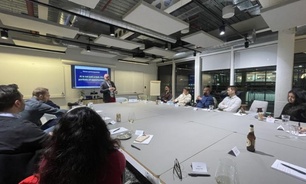
These insights were derived from our recent roundtable on the impact of data and AI on the insurance industry. You can read more about the event here. If you need advice on how you can bring in the right technology and data talent to help manage AI implementation in your business, please get in touch with me.
Disclaimer: Please note that the opinions expressed in this article are the personal views of Harvi Johal and do not represent WildBrain as an organisation.
Fresh Content
Explore our latest market insights, career advice, and more.