Emerging technology and growing pressure to innovate are intensifying focus on product-led models, but is product truly the future in insurance?
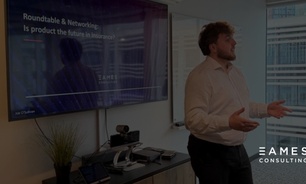
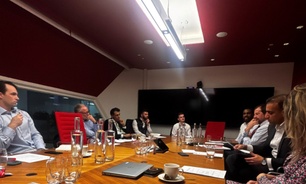
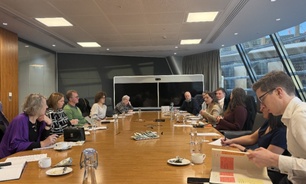
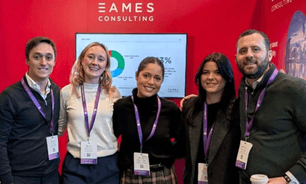
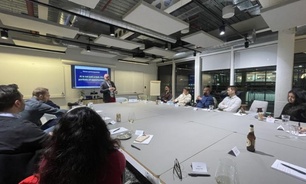
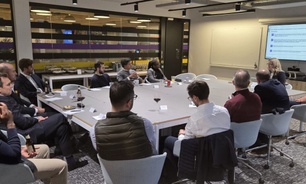
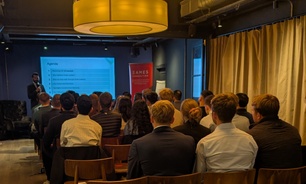
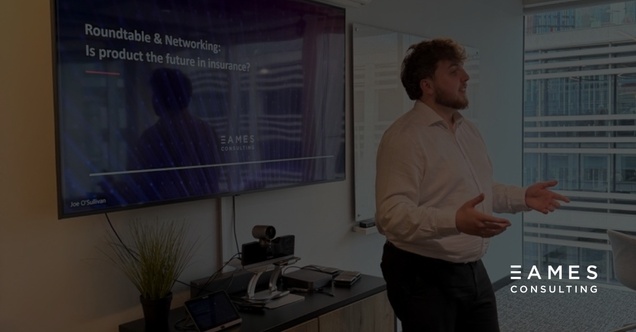
On 28th May, Eames Consulting brought together six Heads of Product and Technology from specialty insurance, broking and underwriting businesses in the London Market.
The conversation, which I hosted under Chatham House rules, explored how firms are enabling product-led change from the C-suite down and building value streams and reporting lines for rapid iteration.
Senior leadership support is enabling product-led strategy and delivery
Traditional insurance operating models are built around project delivery: commit spend to a defined outcome, deliver it, demonstrate ROI.
Product models require something different: Ongoing investment in iterative activity, with returns that are real but less immediately visible.
This creates a structural tension. Executive focus naturally orients toward current expenditure and near-term returns, whereas Product teams are building foundations for future value.
Neither perspective is wrong; they operate on genuinely different time horizons. Bridging them requires shared frameworks and senior sponsor buy-in.
The firms furthest along in their product journey shared a common thread: Senior stakeholder support created the conditions for product-led ways of working.
How prioritisation forums bridge the gap between business and Product teams
As product scales, prioritisation becomes increasingly critical.
Leadership-led prioritisation forums were discussed as an effective mechanism for maintaining alignment between Product teams and wider business objectives. These ensure that what Product is building remains connected to what the business needs.
A recurring challenge is that repetitive, lower-priority work (essential but unglamorous) can fall through the cracks when attention concentrates on higher-impact activity.
One firm in the room addressed this directly by creating a separate function dedicated to maintaining and optimising existing initiatives.
The outcome was twofold: small-ticket items no longer competed for the same bandwidth as higher-potential opportunities, and the Product team gained further capacity for innovation.
The perception gap: When is a firm truly product-led?
Have firms that say they've embraced the shift truly made the structural and mindset changes that product-led models demand?
Many organisations describe themselves as product-led, yet self-perception and reality don't always align. Change & transformation in insurance are still uneven, and the gap often shows up in reporting lines.
Where Product teams report into Technology, they tend to operate in the technology sense only: managing platforms and systems, with limited influence over commercial outcomes.
Alternatively, where Product teams report into wider business functions, they are more likely to have genuine domain ownership. Within the most advanced product-led environments, this includes P&L responsibility. This helps to earn executive support and the commercial mandate needed for agile iteration.
Insurers aren't necessarily getting product-led transformation wrong; many simply believe they are further along than they are. Product teams may also struggle to evidence value to key stakeholders due to changes in leadership or reporting lines.
Reporting lines, it turns out, are one of the clearest maturity signals available, and one that candidates are increasingly aware of when evaluating product-focused opportunities.
What does embracing a product-led model entail for insurers?
Per our discussion with product leaders, the insurers furthest along in product-led transformation have been able to:
-
Organise people, funding, governance and delivery teams around owning business capabilities and outcomes
-
Shift leadership from a mindset of direction to enablement, creating conditions in which teams can iteratively tackle problems and stress-test solutions
-
Move from milestone-driven delivery to a continuous flow of value to customers and colleagues, building longer-term ROI
-
Create networked value streams in which domains collaborate with fewer silos
-
Deliver robust foundations that support long-term scaling rather than quick project-specific wins
How are firms structuring Product teams and ownership to ensure effective delivery?
Structuring Product teams: domain-level ownership vs. sub-functional specialisation
Some organisations structure Product teams around sub-functions within a domain (e.g. building separate Product teams for different areas of underwriting or claims). In this approach, each Product team owns a narrow slice of the value chain.
While this creates focus, it introduces significant interdependency challenges. Progress on one team's work depends on alignment with others.
Another approach is to create a dedicated Product business function which owns product delivery as well as P&L. Though effective, this is still relatively rare in practice.
An alternative model discussed was organising dedicated Product teams around stages of activity (e.g. M&A onboarding, feature development, business line integration), with cross-collaboration between them.
This was reported to reduce the friction of interdependencies, but with an important caveat. Success depends heavily on team stability and low attrition because crucial shared context is lost when people leave.
The OKR tension: Project-thinking vs product-thinking in practice
There was clear consensus among heads in the room: OKRs built around delivery timelines and milestones are challenging to introduce to the Product function.
Project-based OKRs measure completion: Did we ship the thing, on time, and within scope? Product-led OKRs measure impact. Not, "Did we build it on time?" but "did it make a difference?"
A team focused on improving claims resolution speed, for example, needs the freedom to iterate continuously, in a way that milestone-driven frameworks don’t always allow.
For teams already operating effectively under product models, project-style OKRs create extra friction. With their emphasis on output volumes and delivery cadence, they may fail to prioritise the outcomes that product thinking is built upon.
The shift to product-led models is thus not simply a matter of adopting new frameworks. It requires a fundamentally different understanding of what progress looks like.
AI is an accelerator, but with caveats
The product model may lend itself well to the developing AI landscape. The technology aligns with its emphasis on rapid iteration, fail-fast experimentation, and spinning up minimum viable products quickly.
However, there is a risk that executives assume AI will compress traditional value-realisation timelines, when in practice it still takes time for genuine, scalable ROI to materialise.
Although agentic AI is much talked about, insurance is not yet at a place where it has reshaped how Product teams work. It remains an emerging opportunity with ongoing governance questions, rather than an established or mature reality.
Get in touch to join us for our next roundtable
Regarding the initial question posed, this was a key takeaway for me:
In enterprise transformation projects, the Target State defined on day one often evolves as priorities change, scope shifts and the organisation learn. With a product-led model, teams aligned to the business domains and value streams become more autonomous, forward-thinking and accountable in how they deliver against long-term business objectives.
These events are a great opportunity to connect with peers and exchange insights and solutions regarding the market pressures and complexities firms are facing. Many thanks to the heads of technology and product who attended.
If you’d like to discuss current trends in product-led hiring and the market, or join us for our next roundtable, get in touch with our team of Change & Transformation specialists.
Fresh Content