AI is transforming actuarial recruitment and how senior actuarial work is done, but the biggest hiring decisions still come down to ensuring that human judgement and expertise stay in the loop.
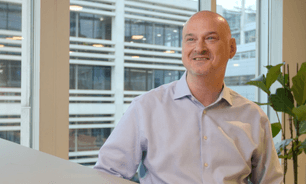
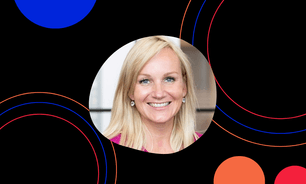
For Dive In Festival 2026, we asked Georgia MacCormack, senior principal consultant in our actuarial practice, how senior talent can use AI while maintaining trust, inclusion and oversight. Here's her perspective:
How can senior actuarial talent embrace AI while keeping inclusion, trust and human judgement at the core?
AI offers enormous potential, but it presents huge risks. For now (at least), AI doesn't create its own worldview, but it does learn from the assumptions, objectives and data we give it. If that data contains bias, AI will reinforce it. And if we place too much faith in algorithms, we risk outsourcing human judgement and treating predictive outputs as objective truth.
Insurance, built on patterns, predictions, data, trends and forecasts, should be a perfect AI playground. But decisions around people, risk, culture and strategy must always be challenged.
My view is that the answer ultimately comes down to intention and accountability. Senior professionals need to be clear about challenging the outputs and where human oversight must remain essential.
Technology itself is neither inclusive nor exclusive, and not inherently trustworthy or untrustworthy. Those outcomes are shaped by the data we use, the governance frameworks we build, and the role we choose for humans to play.
How is AI adoption impacting trust and human judgement in insurance? What opportunities or frustrations are you seeing in hiring from a candidate and client perspective?
Across the actuarial market, there is genuine excitement about AI's ability to improve efficiency and unlock capacity. The clients and candidates I speak to see AI as a phenomenal tool for automating time-consuming analysis, accelerating insight generation and enabling focus on higher-value work.
What will be interesting is whether that balance remains the same over time. I think there is a legitimate question about when, in an AI-centric world, the inherent challenges of human judgement (emotion, bias or intuition) become sources of friction rather than advantages.
However, from a hiring perspective, one thing feels extremely clear: candidates still want a human experience. Whether they're early-career actuaries or seasoned leaders, people want to know that a real person has read their CV and hosted their interview, and that a human has made decisions about their future.
I think the human touch in recruitment will become increasingly valuable. Organisations that engage directly and authentically with talent will signal something important about them and their culture: that people matter and that employees are seen as individuals rather than data points.
Using AI to identify, assess and engage talent more efficiently will be almost essential, but the businesses that win the best people in our market will prioritise real relationships.
What do senior insurance professionals need to work on to remain ready for future ways of working?
The pace of AI development is accelerating to a point where standing still is not an option at all.
Senior professionals don't need to become AI experts, but they do need to understand how these tools work, where they add value and how to incorporate them into their decision-making. The choice is either to adapt with the technology and help shape its use or be left behind by it.
Senior professionals should focus on two things. Firstly, becoming fluent in the technology itself. When a new tool emerges, be the person who understands how to use it effectively, not the person hoping it goes away.
Secondly, identify the gaps that AI cannot yet fill. Building trust, navigating organisational politics, understanding nuance, connecting disparate ideas and seeing the bigger strategic picture are fundamentally human for now.
Most importantly, senior individuals must remain cognisant that they have a responsibility beyond their own careers, to the generation of talent coming up behind them.
This is particularly important when you consider the mixed sentiment we're already seeing towards AI. Many early-career professionals are excited by its potential, but others are disenchanted and deeply uncertain about what it means for their career prospects and where they fit in.
We need to develop a generation of talent that sees AI as a tool that expands their capability and creates opportunities for them. We have a responsibility to preserve the learning experiences that AI may tempt us to bypass and must enable the next generation to build the skills that technology cannot easily replicate: judgement, communication, influence, creativity and commercial thinking.
As we navigate AI, we need to remember to teach too: how to question it, challenge it, and apply it responsibly.
Georgia MacCormack is a senior principal consultant in Eames Consulting's actuarial practice. If you’d like to discuss building your actuarial team, get in touch with our specialists at georgia.maccormack@eamesconsulting.com
Fresh Content